


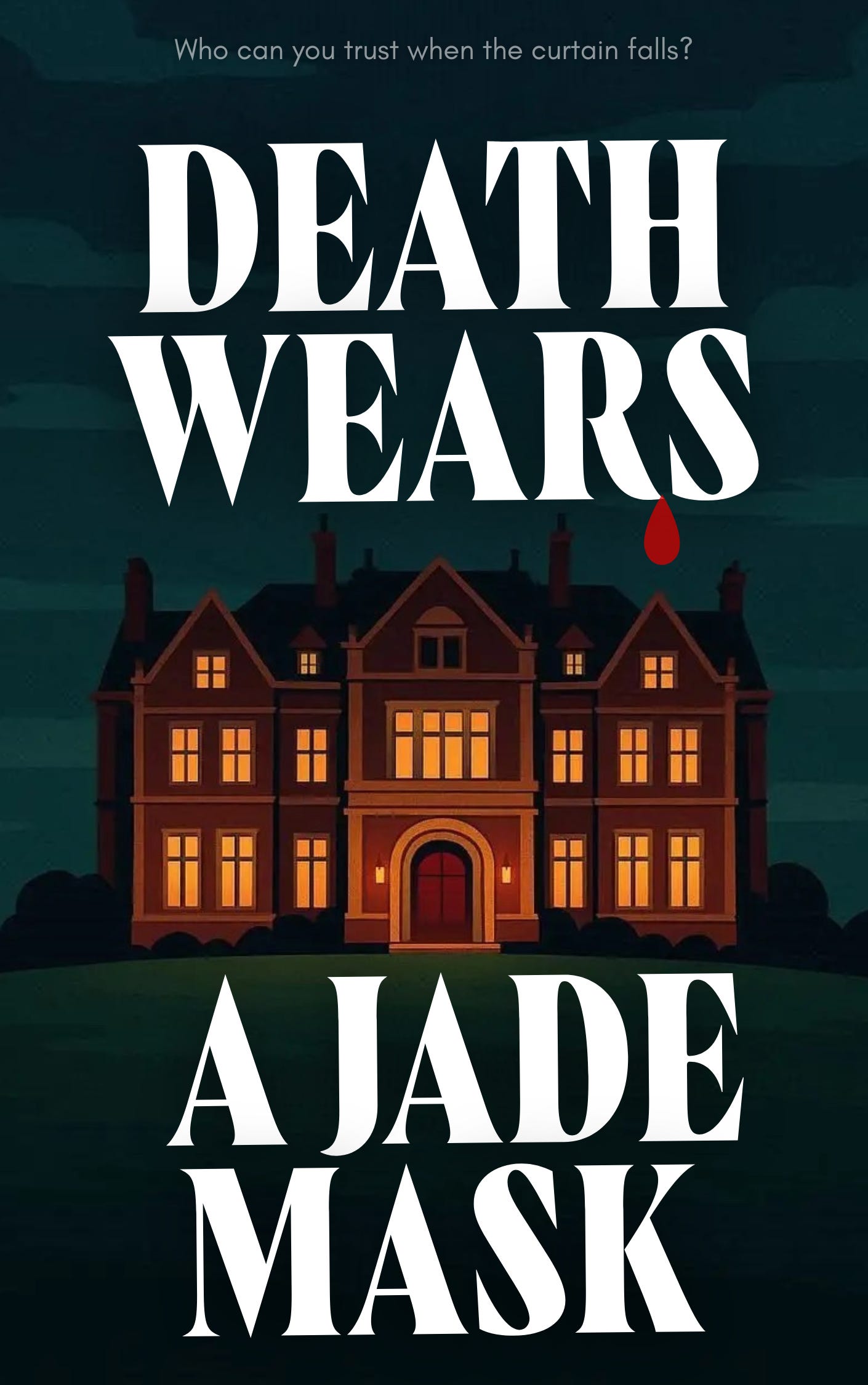
Bunny Beaudoin has one conversation with the city’s medical examiner and immediately needs a lie-down. Dr. Cashler is charming! She has plants! She talks about gardening! And Bunny, consummate professional, falls for every second of it. Private investigator Dash O’Neill, meanwhile, has been in his office doing what he does best: being suspicious of people who are suspiciously nice. A little digging turns into a lot of digging, and what he unearths has a name — Agios Clinics. So naturally, they have to do what they do best: a classic breaking and entering. Until someone starts to walk up the stairs with a pistol and an axe to grind.
✨Prefer a more immersive experience? Listen to the audio version above for a tandem read ✨
🀙🀚🀛🀜
“Don’t move.”
The voice was familiar. Too familiar. Bunny’s stomach dropped like an elevator with cut cables, plummeting through floors of disbelief before crashing into the basement of terrible recognition. She’d heard that voice a thousand times. Asking about the flowers that they gifted major donors every Christmas. Laughing over ridiculous emails and scheduling meetings. Complaining about crazy family members and crazier coworkers.
No. Not her. Please not her.
But even as the denial screamed through her mind, she knew.
Bunny knew exactly who held that gun.
🀙🀚🀛🀜
Four Years Earlier
Bunny had been on the job exactly four days when Fenelope summoned her to review the applications for an executive assistant.
“This one,” Fenelope had said, sliding a resume across her desk, “Recent graduate. Strong references. Types ninety words per minute.”
Bunny scanned the paper. Carol Kelly. Twenty-two years old. Bachelor’s in Communications from Chatham College. Gap year spent traveling through Southeast Asia that seemed wildly impractical for someone now applying to entry-level nonprofit work.
“She seems qualified.” Bunny ventured carefully.
“She’ll do.” Her new boss’s tone implied the decision had already been made and this conversation was merely courtesy.
The interview had been scheduled for ten o’clock on a Tuesday. Carol arrived at 9:47, which Bunny noted approvingly. She’d dressed in a slightly too-big blazer and sensible flats that probably pinched but hadn’t been broken in enough to show it.
“Ms. Beaudoin?” Carol extended her hand with a firm shake that suggested someone had coached her specifically on this, “Thank you so much for meeting with me.”
“Call me Bunny. Please.” She gestured to the chair across from her desk, noting how Carol’s eyes swept the office with genuine interest. Taking in the vintage Fox Theater posters on the walls, the organized chaos of donor files, the coffee cup that declared “World’s Okayest Fundraiser” in cheerful letters.
“Love the mug.” Carol said, settling into her chair.
“Gift from my brother. He thinks he’s hilarious.”
“Is he?”
“Occasionally.” Bunny opened Carol’s resume, though she’d already memorized its contents, “So. Southeast Asia! That must have been quite an experience.”
Carol’s whole face transformed when she smiled.
“It was incredible. I taught English in Thailand for six months, then backpacked through Vietnam and Cambodia,” She paused, as if realizing she might be oversharing, “I-I know it probably seems irresponsible. Taking a gap year when I could have been building my career. But I’d basically spent four years studying communications and realized I had no idea what I actually wanted to communicate about.”
Bunny leaned back in her chair, already taking a liking to this girl.
“And did you figure it out?” She asked.
“Kind of,” Carol leaned forward slightly, her hands animated as she spoke, “At the hostel in Bangkok, I ended up basically running their booking system because their old one was a disaster. In Hanoi, I helped this Australian couple plan their entire wedding in three weeks because their original coordinator disappeared.”
She laughed, genuine and unforced.
“Turns out I’m one of those weird people who actually enjoys making spreadsheets and color-coded calendars.”
Bunny found herself smiling.
“That’s good. Because this job is basically professional chaos management with occasional moments of actual work.”
They’d fallen into easy conversation then, Carol taking diligent notes in between questions, and eventually, Bunny made a quick decision.
“When can you start?”
Carol’s pen stopped on her notebook mid-word.
“I– what?”
“When can you start? Assuming you want the job.”
They’d looked at each other for a moment, something clicking into place.
“I can start Monday,” Carol said, “If that works for you.”
Carol had stood, extending her hand again for a shake that felt less formal now.
“Thank you, Bunny. You won’t regret this.”
And for six years, she hadn’t. Carol had been everything Bunny needed. Efficient, intelligent, funny. They’d celebrated Carol’s promotions together. Commiserated over impossible deadlines. Shared late-night takeout while stuffing letters into envelopes because the mail house had screwed up the timeline.
Carol had been there for all of it.
Watching. Learning. Waiting.
🀙🀚🀛🀜
The present crashed back with the weight of the gun still pointed at them in the darkness. Bunny’s voice came out barely above a whisper, each word dragged from somewhere deep and breaking.
“Carol,” Bunny’s voice came out steady despite the terror coursing through her, “Don’t do this.”
“Don’t do what, Bunny? Protect myself from intruders?”
The coldness in Carol’s voice broke something in Bunny’s chest. Six years of coffee runs and late nights, of shared jokes and mutual exhaustion, reduced to this. A gun barrel catching the dim light from the hallway. A woman she’d trusted transformed into someone she didn’t recognize.
“I’m going to give you two five seconds to turn around and get the fuck out of here.”
Bunny felt Dash shift beside her, his hand finding hers in the darkness. Then, he dropped it. They turned slowly, raising their hands. Carol stood in the doorway, the gun steady in both hands. Her eyes were red-rimmed. She’d been crying, Bunny realized. Recently.
“Carol–” Bunny’s voice broke completely, hopelessly.
The air had gone completely out of her lungs, out of her body, through the floor, out of the door. She felt like a ghost. Carol sniffled, her composure fracturing at the edges before pulling tight again. A tear tracked down her cheek, catching the emergency exit light.
“It wasn’t supposed to be like this,” Carol’s voice dropped to something raw, almost pleading, “It didn’t start off that way.”
The admission hung in the air between them. Bunny could feel Dash calculating beside her, measuring distances, looking for an opening.
“Then how did it start?” Bunny found herself asking despite feeling like her body was ten steps away from her mind. Her voice sounded tinny and distant, something not quite here.
Carol laughed, a bitter sound that echoed off the office walls.
🀙🀚🀛🀜
Four Years Earlier
Carol Kelly had answered the job posting on a Tuesday, the same day her landlord slipped the eviction notice under her door. Three months behind on rent. The notice was printed on cheap copy paper, but the threat was expensive: thirty days to vacate or face legal action.
She sat on the futon that doubled as her bed and her couch, staring at the words until they blurred. Twenty-two years old. A communications degree from Chatham College that had cost sixty thousand dollars she didn’t have. A gap year in Southeast Asia that had seemed adventurous at the time but now felt like a luxury she couldn’t afford to have taken. And a job market that had other ideas about what her degree was worth.
She’d applied to forty-three positions in three months. Marketing coordinator. Social media manager. Development associate. Each rejection email arrived with the same apologetic tone, the same suggestion to “keep in touch” that meant nothing. And those emails came from the ones that bothered to respond at all. The Fox Theater posting was simple: Executive Assistant. Entry level. Immediate start. It paid thirty-two thousand a year, which was barely enough to live on in Magnolia Heights, but it was something. She sent her resume before she could talk herself out of it.
The interview with Bunny Beaudoin had gone better than expected. The woman was warm, funny, and genuinely interested in Carol’s gap year stories. When Bunny offered her the job on the spot, Carol had felt something close to relief. She started the following Monday.
The work was what she’d expected: scheduling, filing, answering phones, making coffee runs. Bunny was demanding but fair, Fenelope was cold but professional. Carol learned quickly that if she stayed organized, stayed quiet, stayed useful, she could be invisible in all the right ways. The money was another story.
After taxes, her paycheck came to about nineteen hundred dollars a month. Rent ate twelve hundred. Student loan payments took another four hundred. That left three hundred for food, transportation, utilities, and the vague hope of having a life. She got a second job bartending on weekends. Then a third, transcribing medical records late at night. She slept five hours if she was lucky. Ate ramen and whatever leftovers she could sneak from Fox events. Stopped buying clothes, stopped going out, stopped pretending she had the bandwidth for anything beyond survival. Her college friends from Chatham—the ones whose parents had paid their tuition outright—posted Instagram photos from beach vacations and brunch spots. Carol deleted the app.
Two years in, she’d managed to save eight hundred dollars.
It felt like a fortune and nothing at all.
Then, she met Glen Valentino. It happened at Overture, late in the evening. She’d left the Fox in a rush and changed into her restaurant-appropriate black slacks. For about a month and half, she’d been bartending for the restaurant, crafting custom cocktails and slinging beers like her life depended on it.
It had.
Carol had been making a neon-pink Cosmopolitan for a particularly bitchy customer when Glen appeared at her bar station.
“You work here?”
He was older than her by decades, silver-haired and commanding in the way men with money often were. She hadn’t known who he was, but he looked like someone who was very, very important.
“I do,” she said, professional smile in place.
“You’re good at it.”
It should have been a nothing compliment. The kind of thing people said when they noticed the help. But Glen said it like he meant it, like he’d been watching her mix drinks and, for whatever reason, found it impressive. The restaurant had slowed down considerably as guests drunkenly called their Ubers, filtering out into the balmy night. Glen stuck around at her bar, sipping his drink. Eventually, they got to talking as she closed down. They talked for five minutes as she wiped down the tabletop. Then ten. He asked about her background, her degree, what she hoped to do with her life beyond serving spicy margaritas. Carol found herself being honest. Told him about the student loans, the three jobs, the gap between what she’d been promised her degree would provide and the reality of trying to survive.
“That’s criminal,” Glen said, and his anger on her behalf felt validating in a way she hadn’t expected, “These institutions sell you a dream and leave you in a lifetime of debt.”
While his eyes seemed sympathetic, Carol couldn’t help but notice that he looked like he hadn’t owed anything to anyone for years. If anything, it was him who was owed. She found herself standing up straighter, and when she went to the bathroom, she dabbed her cheeks with more blush, re-applied her lipstick with a pout. He gave her his number. Told her to call if she ever needed anything. They texted every day after. He would tell her about his days at his company. She told him about the Fox, a fact that he seemed to be particularly interested in. They flirted, heavily.
It was fun.
Exciting.
Being wanted like that.
She finally called three weeks later when her car broke down. Glen listened to her teary complaints, then asked her how much was the damage. She demurred, even though she knew the bill would crush her. He insisted and she finally yielded. He paid for it without hesitation, told her to consider it a gift.
The second time she called, it was because a loan servicer that she’d thought she’d left behind in a flurry of bad decisions abroad started sending threatening letters. Glen made a phone call. The threats stopped. The third time, she didn’t call. Glen showed up at the Fox in a slate grey Spyker, eyes on her slender legs, and a smile that almost knocked the sorrow out of her. She didn’t even notice the stares as she slipped on her sun glasses and drove off into the city with her hair blowing back behind her. That night, they slept together for the first time.
Carol told herself it wasn’t transactional. Glen was attractive for his age, powerful, interested in her beyond her utility. The money was separate. The help was separate. The sex was something else entirely. A choice she was making freely.
She knew it was a lie even as she thought it.
The affair lasted a long time. Discreet meetings at his mansion when the staff was off. Occasional dinners at restaurants far enough from Magnolia Heights that they wouldn’t be recognized. She never asked if he had other girlfriends or a wife. He paid off another chunk of her “bad decision” loans. Covered her rent for three months when she had to quit the bartending job due to exhaustion.
She never told Bunny. Never told anyone.
🀙🀚🀛🀜
Bunny hadn’t seen it. She hadn’t seen how vulnerable Carol actually was. How the cheerful efficiency had been armor over something desperately fragile. She looked at Carol now in the dim emergency lighting. Really looked. The gun trembled in hands that were smaller than Bunny had ever noticed. Carol’s frame was slight, her shoulders narrow. She’d always dressed conservatively for the office, buttoned-up cardigans and sensible flats, but underneath that careful presentation was the kind of beauty that certain men noticed. Delicate features. Long legs. Truly beautiful. But also dependent. Hungry. Willing to make him feel important.
Glen’s type, Bunny realized with sick clarity.
The girl who worked too hard, who never complained, who was always pleasant despite working herself to exhaustion. Who would be grateful for his notice. For his help.
For the illusion that someone powerful cared.
🀙🀚🀛🀜
Two Years Earlier
Then Glen introduced her to Dr. Elaine Cashler.
It happened at the mansion, after one of their evenings together. Cashler arrived unexpectedly, letting herself in with a key Carol hadn’t known she had. The doctor was elegant, commanding, with the kind of effortless authority that made Carol feel instantly young and foolish.
“This is Carol,” Glen said, as though introducing a colleague rather than a mistress.
Cashler’s smile was warm but her eyes were calculating.
“Pleasure to meet you, Carol. Glen speaks highly of your discretion.”
Carol had thought that that was the strangest compliment she’d ever received. Two weeks later, Cashler called Carol directly.
“I have a proposition for you,” the doctor said, “Something that would be mutually beneficial. Can we meet?”
They met at a coffee shop in Eaton, near Magnolia Heights but almost to the edge of Chatham County, neutral territory. Here, antique shops, specialty boutiques owned by older housewives, and fancy cafes dotted the sidewalks. It would have looked like two work mates out to lunch. It was almost quaint. Cashler laid it out simply: she ran a pain management clinic. Legitimate work helping people manage chronic conditions. But the pharmaceutical industry had gotten complicated, distribution channels constricted. She needed someone who could move product discreetly.
“Product?” Carol asked, though she doubted that she’d like the answer to the question.
“There are… people in this community who need access but can’t get it through traditional channels. I need someone who can handle packages. Small items that need to be passed along.”
Carol had stared at her coffee cup then, understanding perfectly well what was being asked.
“I don’t have access to that kind of thing. I’m just admin. And a bar tender?”
“Glen mentioned you’re good with logistics. Event planning,” Cashler leaned forward slightly, “There are fundraisers, galas, charity auctions all over this city. You could attend as Glen’s guest. All I need is someone who can make sure certain packages get to certain people. Very discreet. Very simple.”
“And if I can’t?”
Cashler’s smile never wavered.
“Then we finish our coffee and never speak of this again. But I’m offering you five thousand dollars for the first month. Just for facilitating a few handoffs.”
Carol took it.
She told herself it was just packages. Just facilitating. Glen helped her get into events outside the Fox at first. Museum galas, hospital fundraisers, art auctions. Cashler would provide a small padded envelope or a decorative box. Sometimes art work, but she never asked a lot of questions with that. Carol would pass it to a specific person, usually during the cocktail hour when everyone was distracted by champagne and small talk. Sometimes she’d slip it into a coat pocket. Sometimes she’d place it in a gift bag with auction items. The money appeared in her account like clockwork. Five thousand. Then seven. Then ten.
Then the clinics started appearing. Agios Pain Management. Agios Wellness Center. Agios Recovery Services. Carol saw the ads in glossy magazines, the sponsored posts on social media. Sleek facilities in the heart of midtown with names that sounded legitimate, professional. She didn’t connect them to Cashler at first. Didn’t realize they were part of the same operation until much later, when Glen casually mentioned Cashler’s “expansion” over dinner one night.
“She’s brilliant,” he’d said, cutting into his steak, “Built an entire network in less than two years.”
Carol had felt something like a stone settle in her stomach.
🀙🀚🀛🀜
One Year Earlier
The parking lot behind the Fox went dark by seven. One of the three lights had been out since February, and facilities kept logging it without fixing it, the way facilities always did. Carol’s car was under the one that flickered — she’d arrived late, taken what was left. She noticed things like that now. The angles of light. The distance between where she stood and where the nearest door was.
She’d been at her desk until nearly eight, working on promotional copy for Trouble in Mind, a play that was premiering at the Fox in a few weeks. Draft after draft, the same tired phrasing rearranging itself on her screen. She’d finally saved the file, gathered her bag, and let herself out through the stage door. The lot was nearly empty. A white catering van idling near the loading dock. Two other cars she didn’t recognize.
And Mickey Alden, two spaces down, phone to his ear, laughing at something.
He looked up when he heard her footsteps and gave a small wave. She didn’t really know him. He came in for galas, worked the room, collected his check. They’d exchanged maybe forty words total across three events. He ended the call.
“Working late?” He spoke up over the emptiness of the parking lot.
“Play collateral,” Carol said. She kept moving toward her car.
“Those take forever,” He pushed off the BMW, unhurried, the way men moved when they were confident the conversation wasn’t going anywhere without them, “You’re Carol, right? Bunny’s girl.”
Carol, against her better judgment, paused.
“I work with Bunny, yes.” She wrapped her cardigan tighter around her as she started walking again, gripping her bag closer to her small frame.
“Right, right.” Mickey fell into step beside her without being asked. “I’ve seen you at a few events. The Hargrove & Bennett reception in June. The St. Regis benefit in July.”
She stopped walking again. The flickering light went out above them, then came back.
“How did you know who I was?” Carol breathed, eyes tracking her surroundings in case she needed to make a break for it.
Mickey smiled. He had the kind of smile that worked well from a stage, that read as warmth from a distance.
“Oh, Glen, love. He’s told me all about you. I’ve known Mr. Valentino for a long time,” He said, “We go way back. Long time.”
He paused, looking out at the street, like he was remembering something pleasant.
“But you seemed to be a very…” He trailed off, eyes flicking up and down her frame, “Interesting girl in his life. Which makes sense. You’re pretty. Glen likes his runners pretty.”
The word settled between them.
Runners.
He knew. He fucking knew.
Carol felt something cold move through her, slow as water finding a crack.
She said nothing.
“He’s got good taste, I’ll give him that,” Mickey continued, still in the same easy register, like he was talking about wine. “And Cashler, she’s particular too. Doesn’t trust just anyone. So.”
He turned to look at her then, and his expression hadn’t changed at all, which was the part that made her stomach drop.
“You must be good at what you do.”
The catering van idled. Carol’s keys were in her hand. She was aware of them in a way she hadn’t been thirty seconds ago.
“I help at a lot of events,” She said, “That’s my job.”
“Sure,” He nodded like that was a perfectly reasonable thing to say, “Your job. Absolutely.”
He reached into his jacket pocket and took out his phone, checked something, put it away.
“The thing about this city,” Mickey said, “is that the people who run it — the real ones, not the ones whose names are on the buildings — they all know each other. Have for years.”
He looked at her with something that might have passed for sympathy.
“And then every so often, someone new comes along. Young. Hungry. In a little over her head, maybe, but smart enough to be useful.”
He said it without cruelty, tilted his head.
“I’m not criticizing. I’ve benefited from his generosity myself, in different ways. We all have our arrangements.”
Carol said nothing.
“The difference,” He continued, “between me and you is that I’ve been around long enough to know how these arrangements end. And you—” he looked at her with something almost like pity, “—you’re still in the part where you think the money is a gift.”
The lot was quiet. The catering van had stopped idling.
“I’m going to ask you a favor, honey.” He smiled.
Carol could barely suppress the shiver that moved through her.
“The Fox gala. Next October. Carissa Levinson’s firm just won a big case — she’ll be sponsoring a table. I need Glen seated with her. Same table,” He paused, “You do the seating arrangements.”
“That’s not how we arrange seating. Those are two separate—”
“I know how you do seating,” The smile again, “I’m asking anyway.”
Carol looked at him. Really looked. The hair impeccable even at this hour.
“And if I don’t?” She asked, mustering whatever meager courage she could even as the question fell flat to her own ears.
Mickey tilted his head again, as if the question genuinely saddened him.
“I want you to understand something,” He started, stepping a hairs breadth closer, “I am the least of your problems right now. Cashler’s little operation? That’s a federal matter. Not a Magnolia Heights matter. Not a local-police-can-be-managed-matter. Federal.”
He let that sit for a moment. Waiting.
“A pretty girl who was just passing envelopes at cocktail hours still ends up in a room with prosecutors who are not interested in ‘I didn’t know what was in them.’ Who have done this before and are very good at making sure everyone involved sees the inside of a courtroom and the underside of a jail cell.”
He paused for a beat.
“And we wouldn’t want that now, would we, dear?”
🀙🀚🀛🀜
“But… but then that means Mickey lied to us,” Bunny stammered stupidly, “He told us that Fenelope changed the seating chart, that she orchestrated the whole thing.”
She could almost feel the vitriol roiling off of Carol as the cruel frown on the assistant’s face deepened. It hit Bunny like a slap.
“Oh, grow up, Bunny,” Carol snapped, then gathered herself, steeling herself through dried tears, “But this wouldn’t have happened without your help, Ms. Beaudoin.”
Carol cocked her head to the side, a small smile creeping to her face,
“Isn’t that right, Bunny?”
Bunny’s name rolled off her tongue with faux softness. Carol pulled the gun back slightly, like a cat playing with its food. Bunny opened her mouth. Something came out, small and shapeless.
“I don’t–” She stopped. Started again, “That’s not–”
Carol watched her with the patience of someone who already knew the answer.
🀙🀚🀛🀜
One Year Earlier
Fenelope’s office had two windows that faced the alley. Neither had been cleaned recently. The light that came through was gray and thin, and it fell across the desk where Bunny had laid out the projections in a row: Q3 actual, Q3 projected, the gap between them in a column that did not improve no matter how many times she read it.
“We’re down forty-two thousand against last year’s number,” Bunny said, “ And last year’s number was already tight.”
Fenelope was looking out the window. She held her reading glasses in one hand but had not put them on.
“The board will want to see a path to recovery at the November meeting.” She said it flatly, not quite a question.
“Which is why the gala has to do more work than we originally planned,” Bunny pulled the projection sheet forward, “If we hit full capacity, premium table sales, plus action, we land about sixty-three thousand above minimum. If we don’t–”
“We don’t have another quarter to absorb a shortfall,” Fenelope set her glasses down, “I’m aware.”
The room was quiet for a moment. A door opened and closed somewhere down the hall.
“You need a lead sponsor,” Fenelope said it like it was obvious, like the solution was boring to her, “Someone whose name on the invitation does the selling for you.”
“I’ve been working a short list– the Goldsteins, the Patels, Mendez Group, a few others who’ve–”
“Glen Valentino.”
She said it without looking up from the desk. Then she seemed to hear herself say it, and something in her face went quiet. She put her glasses on, picked up the projection sheet, and read it again as though she hadn’t already read it twice.
“He gives,” She said, her voice changing registers, “Or he used to.”
Bunny waited.
Fenelope set the sheet down and aligned it with the edge of the desk.
“We have different channels now,” She said to the window, “Use the Goldstein contact. And the Mendez Group. I can reach out to Sanjiv, maybe get a hold of the Patels that way. Start there.”
She picked up her pen. The meeting was over.
Bunny gathered the sheets.
She did not ask anything further. Fenelope was not a woman who invited questions, and four years had taught Bunny the difference between a pause that wanted filling and one that didn’t. But she wrote Glen Valentino’s name at the bottom of the short list, below the fold, where Fenelope couldn’t have seen it if she’d looked.
Finding him without Fenelope’s introduction had taken longer. Three weeks of lateral moves: a board member who knew his foundation director, who knew his scheduler, who passed along an address for written correspondence only. Bunny wrote the letter on Fox letterhead and kept it short. He responded through his assistant. Agreed to a call. Said yes at the nine-minute mark.
The next morning, she told Teena at the front desk before she’d even taken her coat off.
She had not thought about the look on Fenelope’s face when he strode in on the night of the gala. Not once.
Not until now.